


A new hire shows up on their first day. They pull on the company shirt, and right there on the chest is a sharp, professionally finished patch with the company logo. Suddenly they're not just an employee, they are a part of the team. That's the quiet power of custom patches for uniforms.
We've been making custom patches at Quality Woven Labels since 2008, and uniform patches remain one of our most consistent product categories. From security firms ordering 500 chest patches to a small landscaping crew needing 15, the orders span every industry you can think of. Restaurants, automotive shops, hospitals, warehouses, tech companies with branded polos — they all use work patches, and most of them don't realize how many options exist until they start looking.
This guide breaks down what you need to know before ordering custom patches for uniforms: the different types, how to pick the right one for your application, backing and attachment options, design considerations, and what to watch out for so you don't waste money on patches that fall apart after three washes.
Why Uniform Patches Still Matter in 2026
Direct-to-garment printing has come a long way. Screen printing is cheaper than ever. So why do businesses keep ordering patches?
Durability is the big one. A printed logo on a work shirt starts fading after 20-30 wash cycles. A well-made embroidered or woven patch will outlast the shirt itself. For industries where uniforms take a beating, like construction, maintenance, food service this matters. Nobody wants to re-order shirts every quarter because the logo faded.
Then there's perception. Patches carry a certain weight. They signal permanence, professionalism, and investment. When your field technician walks into a client's home wearing a uniform with a clean, raised embroidered patch, it registers differently than a screen-printed tee. It's subtle, but customers notice.
Patches also give you flexibility that printing doesn't. You can sew the same patch onto different garments like jackets, polos, hats, and bags. You can swap them between uniform pieces. Some companies even use velcro-backed patches so employees can move their name patch from a summer polo to a winter jacket without ordering duplicates.
Types of Patches for Work Uniforms
Not all patches are the same, and the right choice depends on your uniform material, your logo complexity, and how the uniform gets used day to day.
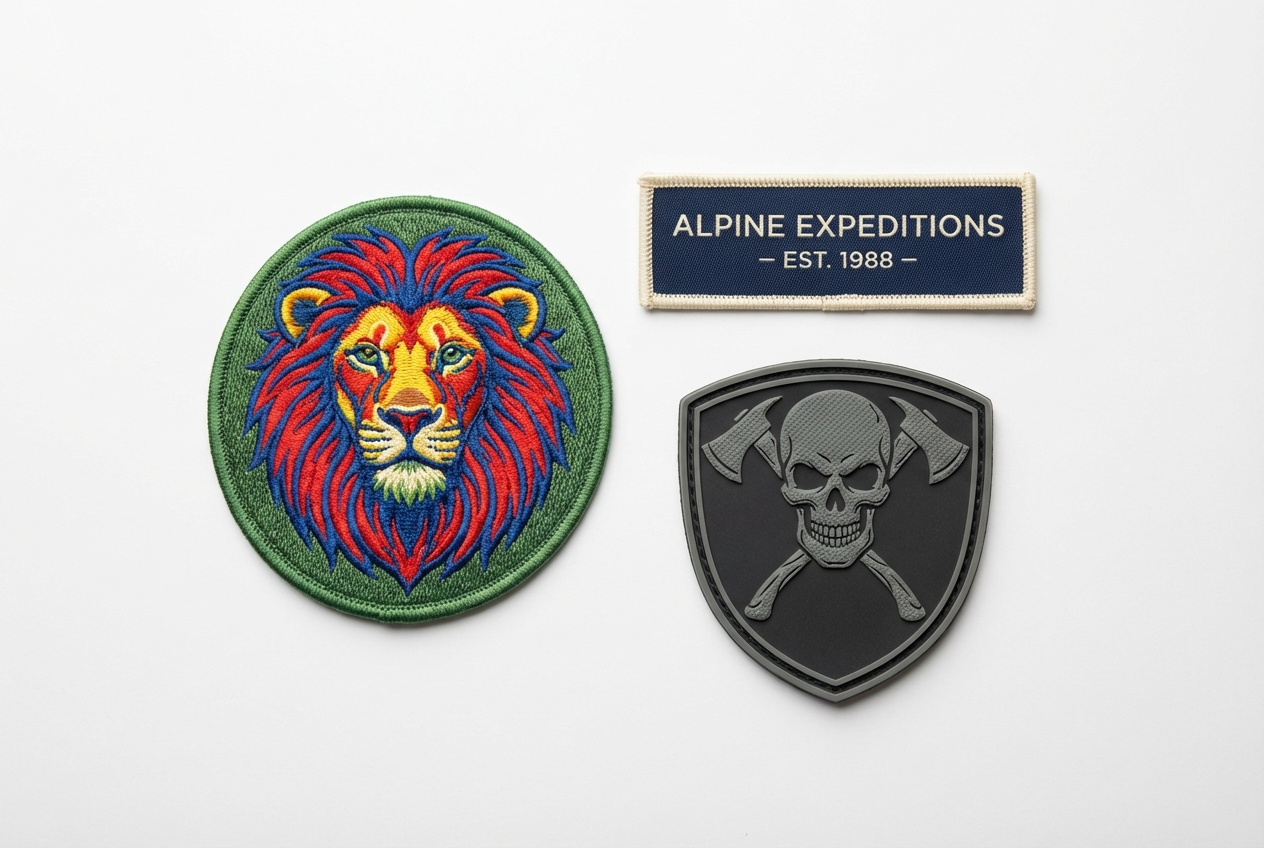
Embroidered patches are the classic choice and still the most popular for uniforms. Thread is stitched directly onto a twill backing, creating a raised, textured look that feels substantial. They hold up incredibly well to washing and daily wear. The limitation is fine detail. If your logo has tiny text under 5mm or photographic elements, embroidery can't reproduce it cleanly. But for most company logos, embroidered patches are the go-to, and for good reason.
Woven patches use thinner threads and a tighter weave, which means they can capture much finer detail than embroidery. If your logo has small text, thin lines, or intricate artwork, woven patches will reproduce it more accurately. They sit flatter against the fabric too, which some businesses prefer for a sleeker look. The tradeoff is that they don't have that raised, tactile quality of embroidery.
PVC patches are molded from soft rubber and are essentially waterproof. They're popular with outdoor companies, military-style uniforms, and any application where the uniform is getting wet or dirty regularly. PVC patches wipe clean, don't absorb stains, and the colors never fade. The minimum order is typically higher (100 pieces for us), so they make more sense for larger teams.
Printed patches use sublimation onto fabric and can reproduce full-color photographic images. If your company logo has gradients or complex color blending, printed patches handle that where embroidery and weaving can't. They're lighter weight and lay very flat. The durability is good, though not quite on par with embroidered or PVC for heavy-abuse environments.
Choosing the Right Backing and Attachment
The backing is just as important as the patch face, and it's the detail most first-time buyers overlook. The wrong backing for your uniform material will cause problems down the line.
Iron-on (heat seal) backing is the most common for permanent uniform applications. A layer of adhesive melts when heat is applied, bonding the patch to the fabric. It works great on cotton and poly-cotton blends. For best results, we always recommend a few reinforcing stitches around the edge after ironing as the heat bond alone will eventually weaken with repeated laundering.
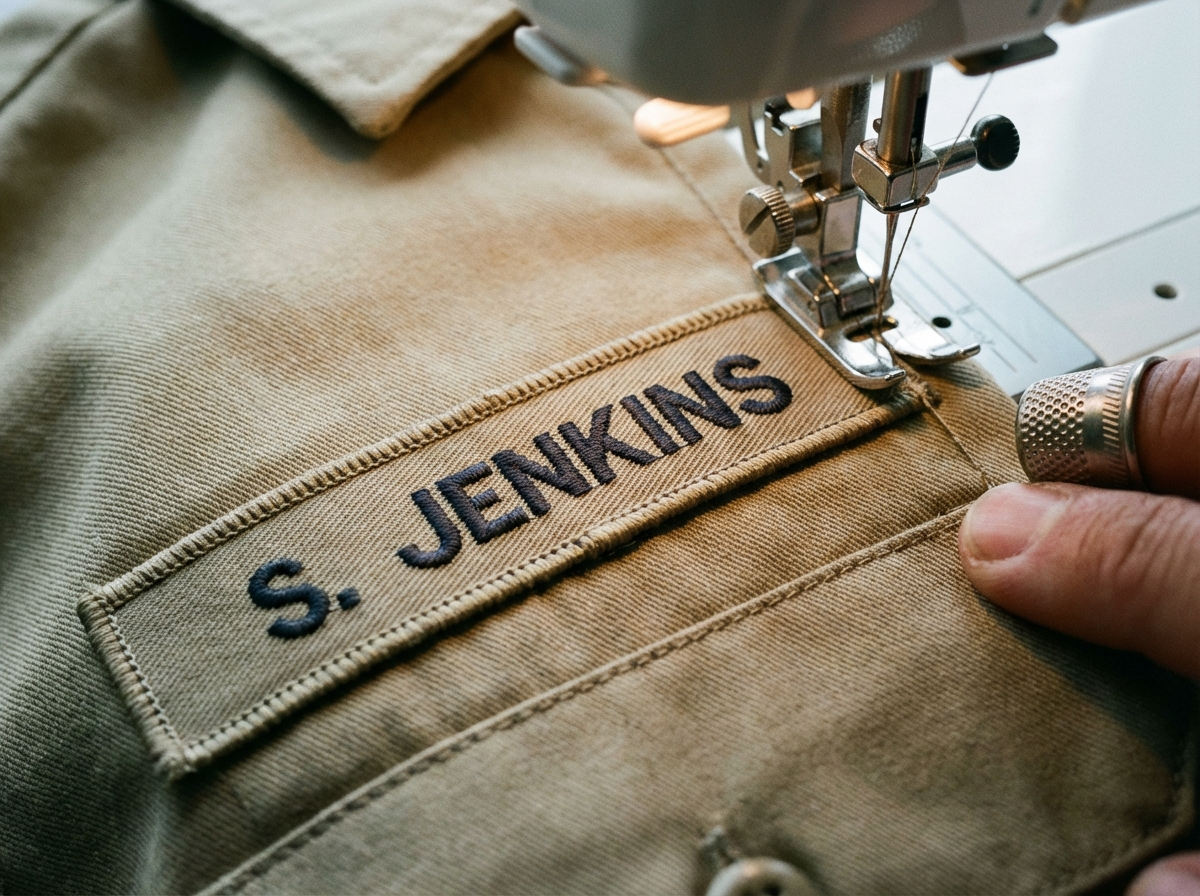
Sew-on backing is the most durable attachment method, period. The patch is stitched directly to the garment. If your uniforms go through industrial laundering or heavy daily wear, sew-on is the way to go. Many uniform supply companies can sew patches on during garment assembly, so it doesn't have to mean hand-sewing each one yourself.
Velcro (hook-and-loop) backing gives you removable patches. One side is sewn or ironed onto the garment, the other is attached to the patch. This is popular for military-style uniforms, security companies, and businesses where employees share garments between shifts or need to swap name patches. The hook side does tend to collect lint over time which is something to keep in mind.
Adhesive (sticker) backing has a peel-and-stick application. We don't recommend this for uniforms that get laundered. It works for single-event use, like trade shows, and one-day promotions but won't hold up to washing.
Design Tips for Uniform Patches
After producing thousands of custom uniform patches, we've seen what works and what causes problems. Here's what we tell every client.
Keep it simple. Your patch is typically 3-4 inches across. That's not a lot of real estate. A clean logo with bold lines will read much better at that scale than a complex illustration with fine detail. If your main logo is too detailed for a patch, consider a simplified version — many major brands have a "mark" version of their logo specifically for small applications.
Choose the right border. A merrow (overlock) border gives that classic raised-edge look and adds durability. A laser-cut border is flat and clean, better for irregularly shaped patches. For rectangles and circles, either works. It comes down to the aesthetic you want.
Size matters more than you think. A chest patch is typically 3-4 inches wide. A shoulder or sleeve patch can go up to 4-5 inches. Name patches are usually 1 inch tall by 3-4 inches wide. Measure the placement area on your actual uniform garment before finalizing the size — patches that look right on screen can surprise you in person.
Common Industries and Their Patch Preferences
Over the years, we've seen clear patterns in what different industries order.
Healthcare and medical: Lightweight woven patches that sit flat under lab coats. Usually small (2-3 inch) with hospital or clinic logos. Sew-on backing because these uniforms get laundered at high temperatures.
Security and law enforcement: Embroidered patches with merrow borders, often with velcro backing so officers can switch between jackets and shirts. Larger sizes (3.5-5 inch) with bold designs that are visible from a distance. Reflective thread options for night visibility.
Food service and hospitality: Iron-on or sew-on embroidered patches, usually smaller chest logos. Easy-clean PVC patches are gaining popularity for kitchen staff since they don't absorb grease. Name patches are common for front-of-house staff.
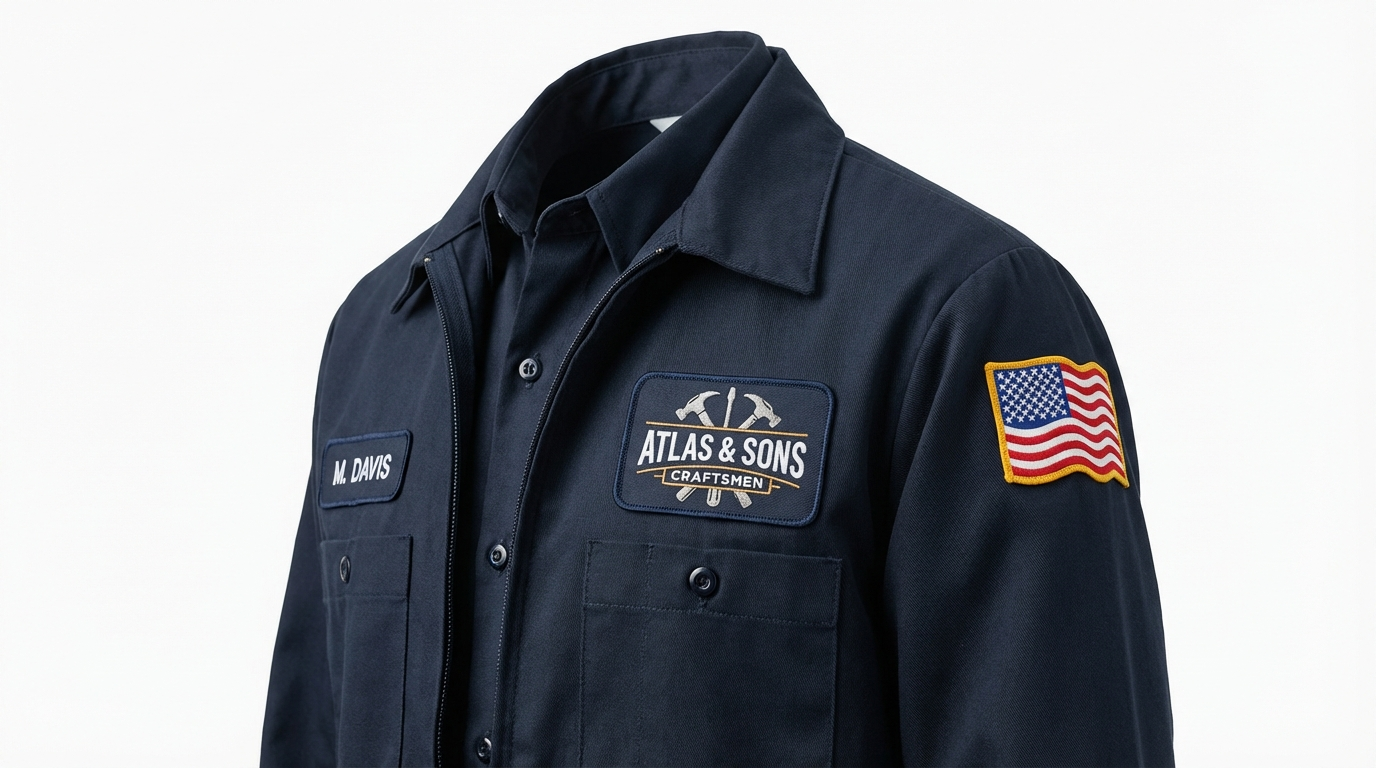
Skilled trades (electrical, plumbing, HVAC): Durable embroidered patches with sew-on backing. These guys need patches that survive daily abuse. Company logo on the chest, name on the opposite side, sometimes a certification patch on the sleeve.
Corporate and tech: Woven patches for a refined, flat look on polos and button-downs. Smaller sizes, subtle placement. Some companies are moving toward woven labels sewn into the sleeve hem rather than traditional front-chest patches.
What to Know Before You Order
A few practical details that save headaches.
Order quantities: At Quality Woven Labels, our minimum for embroidered and woven patches is just 5 pieces. That means even a small business can get professional custom patches without committing to hundreds. For PVC patches, the minimum is 100 pieces due to the mold setup involved.
Turnaround time: Standard production runs about 2-3 weeks from art approval. If you're on a tight timeline, ask about rush options — but plan ahead when you can. Rush fees exist for a reason, and you'll get better results when the production team isn't racing.
Art files: Vector files (AI, EPS, SVG) produce the best results. If you only have a JPEG or PNG of your logo, that's workable, but vector originals mean cleaner lines and more accurate color matching.
Color matching: Thread colors are matched to Pantone® (PMS) numbers. If your brand has specific Pantone colors, include them when you order. If not, we'll match as closely as possible from our standard thread palette, which covers several hundred colors.
Sampling: For large orders or a first-time design, request a sample before full production. It costs a bit more upfront but lets you verify size, color, and placement on the actual garment. Much cheaper than re-doing 300 patches because the blue was slightly off.
Getting Started
If you're looking at custom patches for uniforms for the first time, or switching from a supplier that hasn't been delivering the quality you need, we make the process straightforward. Send us your logo, tell us the quantity and preferred patch type, and our team will put together a free quote, usually within a business day. With minimums starting at just 5 pieces for embroidered and woven patches, there's no reason to settle for generic when custom is this accessible.
The information below is required for social login
Sign In
Create New Account