



Picture a customer at a craft fair picking up one of your sweaters. She turns it over, finds your custom woven tag stitched neatly at the neckline, then reaches for the hang tag. The card is lovely. The printing is crisp. And the string is a limp, fraying bit of white thread that looks like it came off a spool in a junk drawer. It is a tiny moment, but she notices. Everybody notices.
We have helped thousands of small brands and makers dress and finish their products since 2008, and this is one of the details we see overlooked most often. People spend weeks perfecting a logo, choosing card stock, and approving custom hangtags, then grab whatever string is on hand at the last minute. The good news: fixing it is easy, inexpensive, and one of the quickest upgrades you can make to how your work feels in someone's hands.
Let's walk through the options, how to match them to your brand, and the practical tips we have learned from watching products go out the door.
Why the Fastening Matters More Than You Think
Your hang tag does a few jobs at once. It carries your price, your size, maybe a care note or a short story about who made the piece. But it is also a physical handshake. The string or pin is the part customers touch first when they pull the tag toward them, and it is the part that has to survive shipping, store racks, and curious hands.
A good fastening does three things. It holds the tag securely without tearing through the hang tag itself. It looks like it belongs with your brand. And it comes off cleanly when your customer is ready to wear or use the item. Miss any of those and the whole presentation slips a little. A tag that falls off in transit means a product with no price and no brand story. A fastening that is hard to remove means someone is reaching for scissors near a fabric you worked hard on.
Think of it this way: your woven labels tell people who made the garment. Your hang tag tells them why it is special. The string is what ties those two messages together.
Cotton String, Twine, and Ribbon: Picking Your Material
Most makers end up choosing between a handful of string styles. Each one has its own personality, so it helps to think about the mood you want before you think about price.
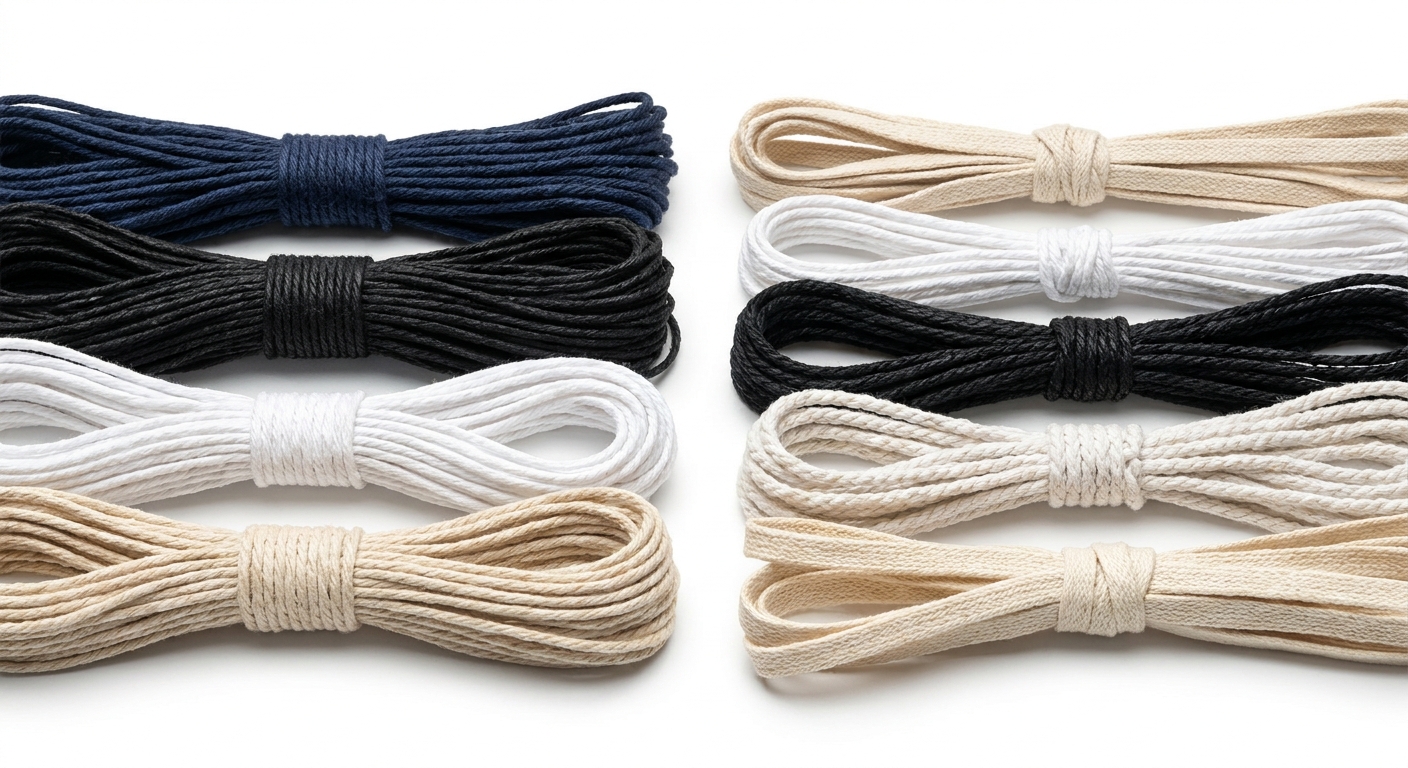
Natural cotton string is the friendly all-rounder. It has a soft, slightly textured look that pairs beautifully with kraft cardstock, recycled stock, and earthy color palettes. If your brand leans handmade, organic, or cozy, cotton string almost always feels right. It knots easily, which matters a lot when you are tying tags by hand at the kitchen table on a Sunday night.
Waxed or twisted cord brings a bit more structure. It holds its shape, resists fraying, and looks a touch more polished. We see it a lot with leather goods, denim, and workwear inspired lines where a sturdier feel suits the product.
Satin or grosgrain ribbon is the dressy choice. A narrow ribbon threaded through a deluxe tag turns a simple purchase into something that feels like a gift. It is lovely for baby clothes, bridal accessories, candles, and anything sold around the holidays. Ribbon takes a little more care to tie neatly, so plan a few extra minutes per batch.
Elastic loops are a quiet favorite for knitwear and accessories. They slip over a button or through a buttonhole without any knotting, and they come off without scissors. If you sell hats, scarves, or anything you would rather not pierce, they are worth a look.
You can browse our ready-to-use hang tag string options to see colors and styles side by side. Matching your string to a color already in your woven labels is a simple trick that makes everything look planned.
Safety Pins and Loop Pins: When String Isn't the Answer
Sometimes just string is not always the best fit. If you are tagging thick outerwear, bags, or items that will be handled a lot on a shop floor, a small pin can be the more secure option and help streamline the hang tag application process.
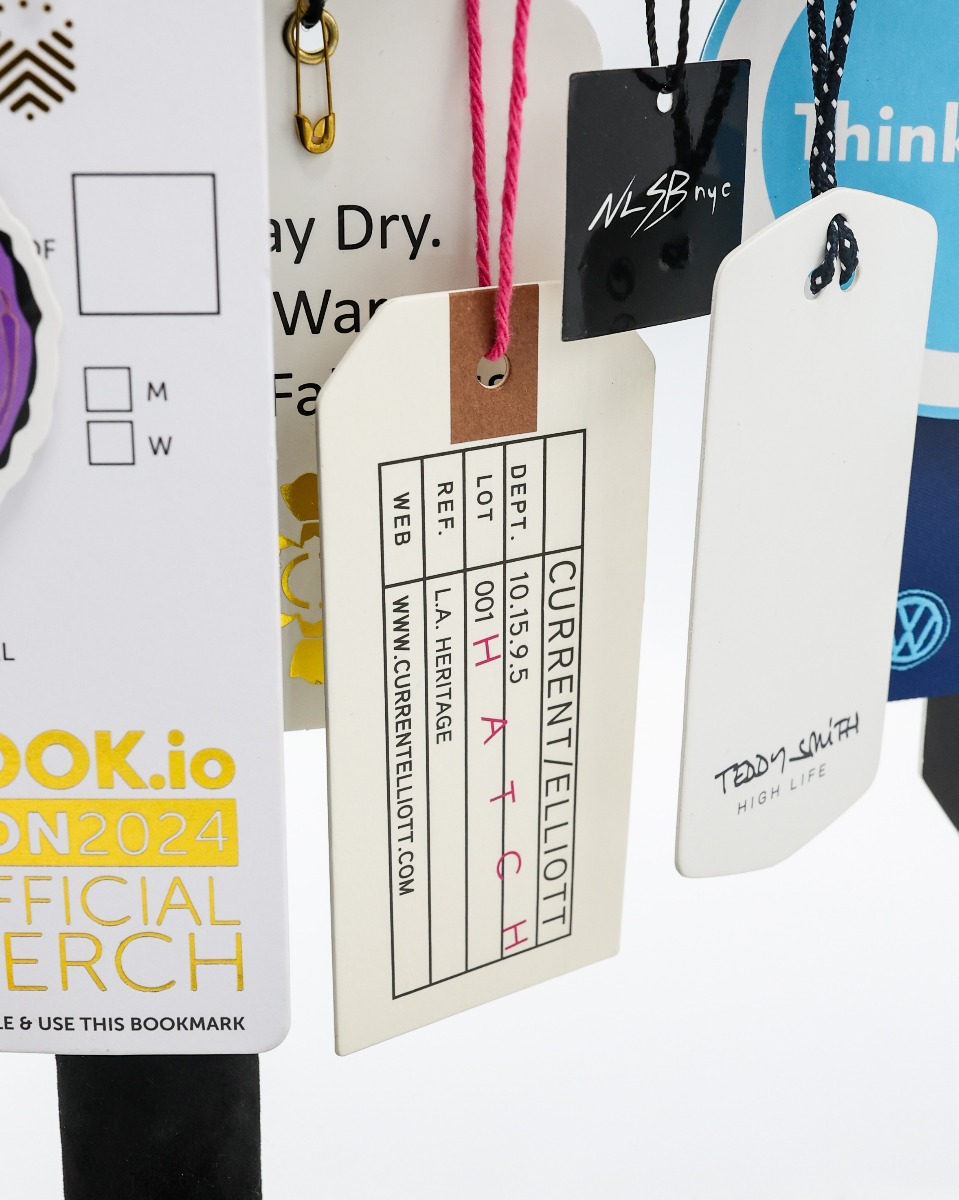
Little gold or silver safety pins have become something of a signature for indie fashion brands. They feel deliberate, a little bit vintage, and they are reusable, which customers tend to appreciate. A safety pin through the string attached to the hang tag and into a seam allowance or your woven label loop keeps everything in place without adding a single knot.
A few practical notes from our team. Pin through a seam allowance or the tag itself, never through the face of a delicate fabric, because some knits and silks will show a mark. Check that your pin finish works with your hardware: gold pins look wonderful next to gold snaps and zippers, and a little clash next to gunmetal. And for kids' clothing, always think about safety first. Strings that remove cleanly are usually the smarter call there.
Plastic loop pins (the kind applied with a tagging gun) are fast and inexpensive, but they rarely feel boutique. If you are a small maker selling on presentation, we usually suggest string or a metal pin instead.
Matching Fastenings to Your Hang Tag Style
Your fastening should feel like it was chosen alongside your hang tag, not after it. Here are some helpful tips about pairing them.
Basic hang tags are clean, simple, and budget friendly, with a minimum of just 50 pieces. They shine with natural cotton string or a slim colored cord. Keep it simple and let your logo do the talking. A matte card with a matching cotton string is one of the most reliable looks we know.
Deluxe hang tags are where you can have a little fun. Thicker stock, special finishes, and richer printing deserve a fastening with some presence. Satin ribbon, waxed cord, or a brushed metal safety pin all hold their own next to a heavier card. If you have invested in a premium hang tag, do not undercut it with fastening hardware.
Think about hole placement too. A tag punched close to the edge can tear when it is pulled, especially with a stiff cord. A hole set in a bit from the edge (⅛” - ¼”), ideally with a reinforced eyelet on thicker stock, gives you much more durability. And if your tag is long and narrow, a top hole keeps it hanging straight; a corner hole gives it a playful tilt.
Finally, look at your woven logo labels and your hang tag together on the garment. Pull one thread color from your woven label and repeat it in the string. Customers will not always name what they are seeing, but they feel that the details were thought through.
Lengths, Knots, and Little Tricks We've Learned
This is the part that saves you time and frustration, especially if you are applying hang tags by hand.
Choose the right length. Too short and the tag hugs the garment and is hard to read. Too long and it tangles in shipping and dangles awkwardly on a rack. For most apparel, a loop that lets the tag hang a few inches (3”-4”) from the attachment point is about right. Test with one finished piece before you cut a whole batch.
Pre-tied loops are your friend. If you are applying hundreds of pieces, strings that already come tied into loops save hours. You simply thread the loop through the tag hole, then through itself around a button, belt loop, or care label. No knotting, no uneven lengths.
Attach to something sturdy. The best anchor is a buttonhole, a belt loop, the loop of a woven label, or a seam allowance. Avoid looping around delicate knit stitches, which can snag and pull.
Trim and seal. If you tie your own knots with cotton string, a tiny dab of clear fabric glue on the cut end stops fraying for the life of the tag. With synthetic cord, a quick pass with a lighter (carefully, away from the garment) seals the end neatly.
Tag in batches. Set up a little station: tags in one tray, strings pre-cut in another, finished pieces on a rack. It sounds obvious, but makers who batch their application process tell us it cuts the job time dramatically and gives far more consistent results.
A Quick Checklist Before You Order
Before you place your hang tag and string order, run through a few questions. What is the mood of your brand: earthy, polished, playful, luxurious? What products are you tagging, and can they be safely pierced? Will tags travel through the mail, sit on a shop rack, or be handed over at a market? Does your fastening color repeat something in your woven tags or packaging? And are you applying by hand, where pre-tied loops would save your weekends?
If you can answer those, you are already ahead of most brands. And if you are not sure, that is exactly what we are here for. Send us a photo of your product and your tag design, and our team will happily suggest a pairing that feels right.
The Finishing Touch
Your custom woven labels carry your name into every piece you make. Your hang tag invites people to learn your story. The little string connecting them is the last thing between your product and a customer's decision, so give it the same love you gave everything else.
We offer free quotes and low minimums on hang tags, strings, pins, and woven labels, so you can try a new pairing without committing to a huge run. Tell us what you are making and we will help you put a beautiful finish on it.
The information below is required for social login
Sign In
Create New Account