


When you're choosing labels for your clothing line, it’s not just about how they look on day one. It’s about how they perform over time, how they feel to your customer, and how they align with your brand.
We’ve been manufacturing custom clothing labels since 2008, and one question comes up constantly:
“Should I use heat transfer labels or woven labels?”
The reality is, both have their place. Each option comes with its own strengths and limitations, and understanding those differences will help you make the right decision for your product.
Construction & Application: How They’re Made Matters
The core difference between woven labels and heat transfer labels comes down to construction.
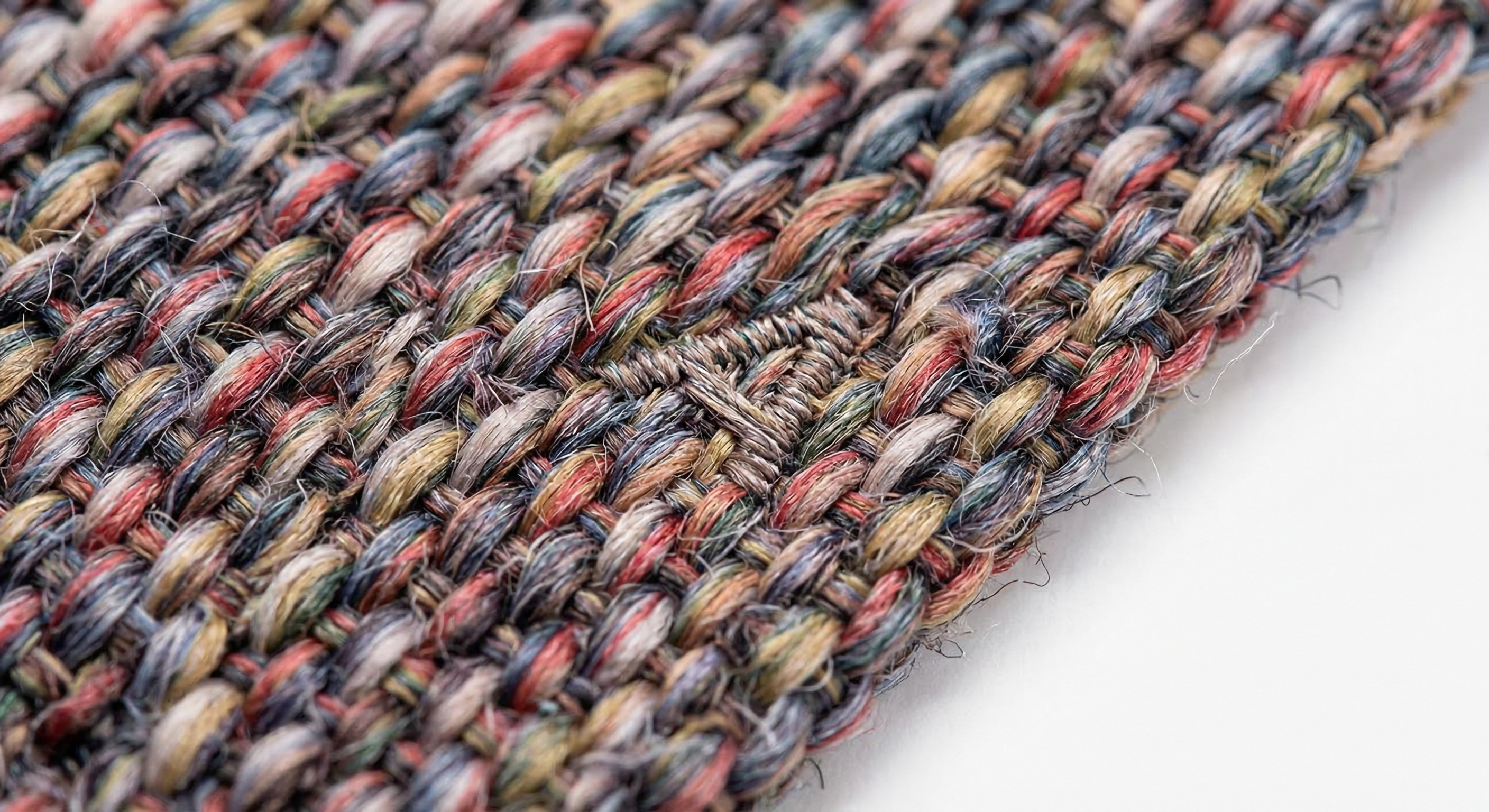
Woven labels are created by interlacing individual threads together to form your design. Your logo, text, and details are built directly into the fabric itself using colored threads. These labels are then sewn into the garment, becoming a permanent physical component of the product.
Heat transfer labels work differently. They are printed designs applied to the surface of a garment using heat and pressure. The artwork sits on top of the fabric and bonds through an adhesive layer, creating a smooth, tagless finish.
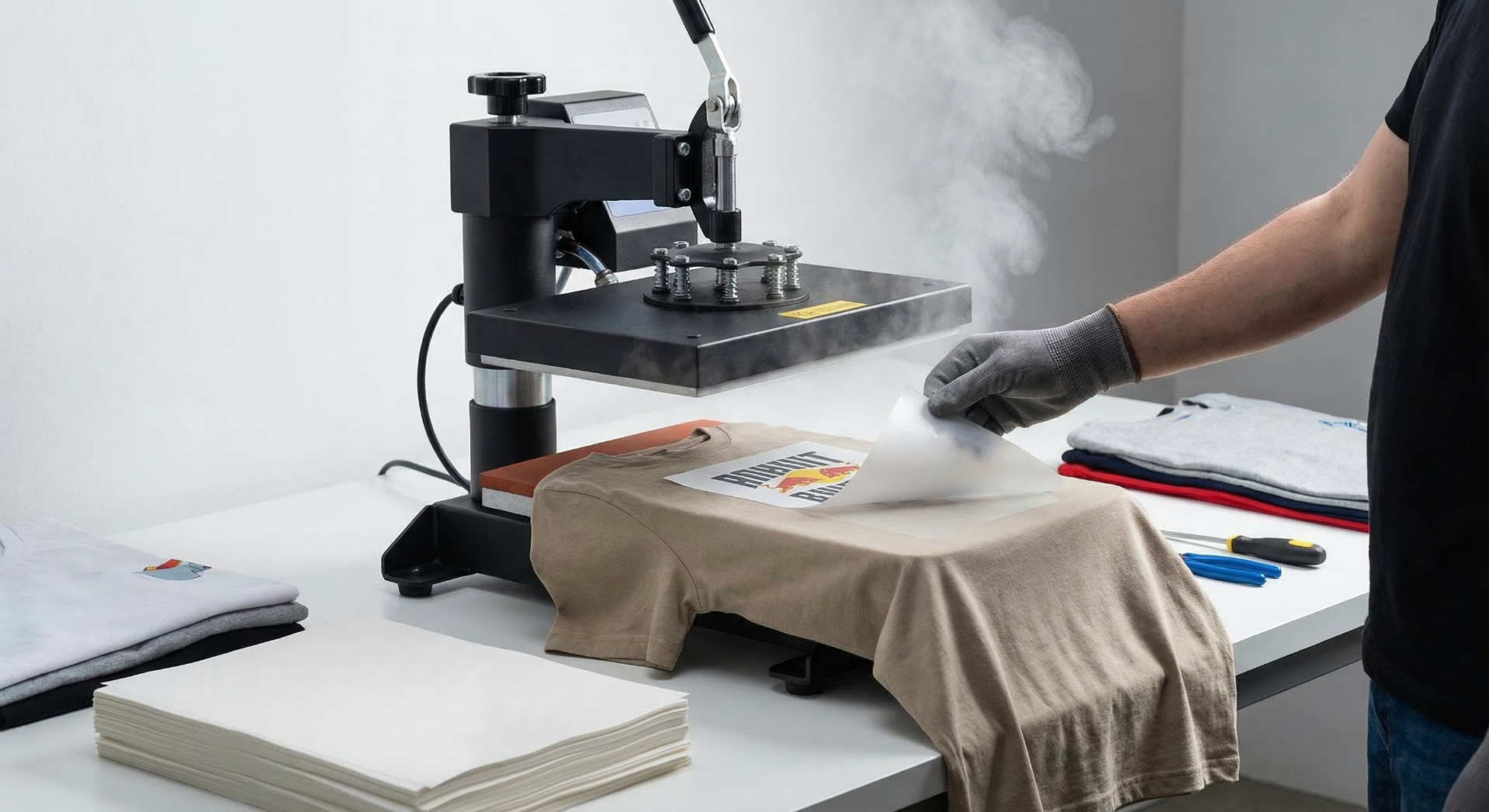
This difference in construction directly impacts everything from durability to comfort to application method.
Durability Over Time: What Happens After Repeated Wear
Durability is often one of the biggest deciding factors when comparing these two options.
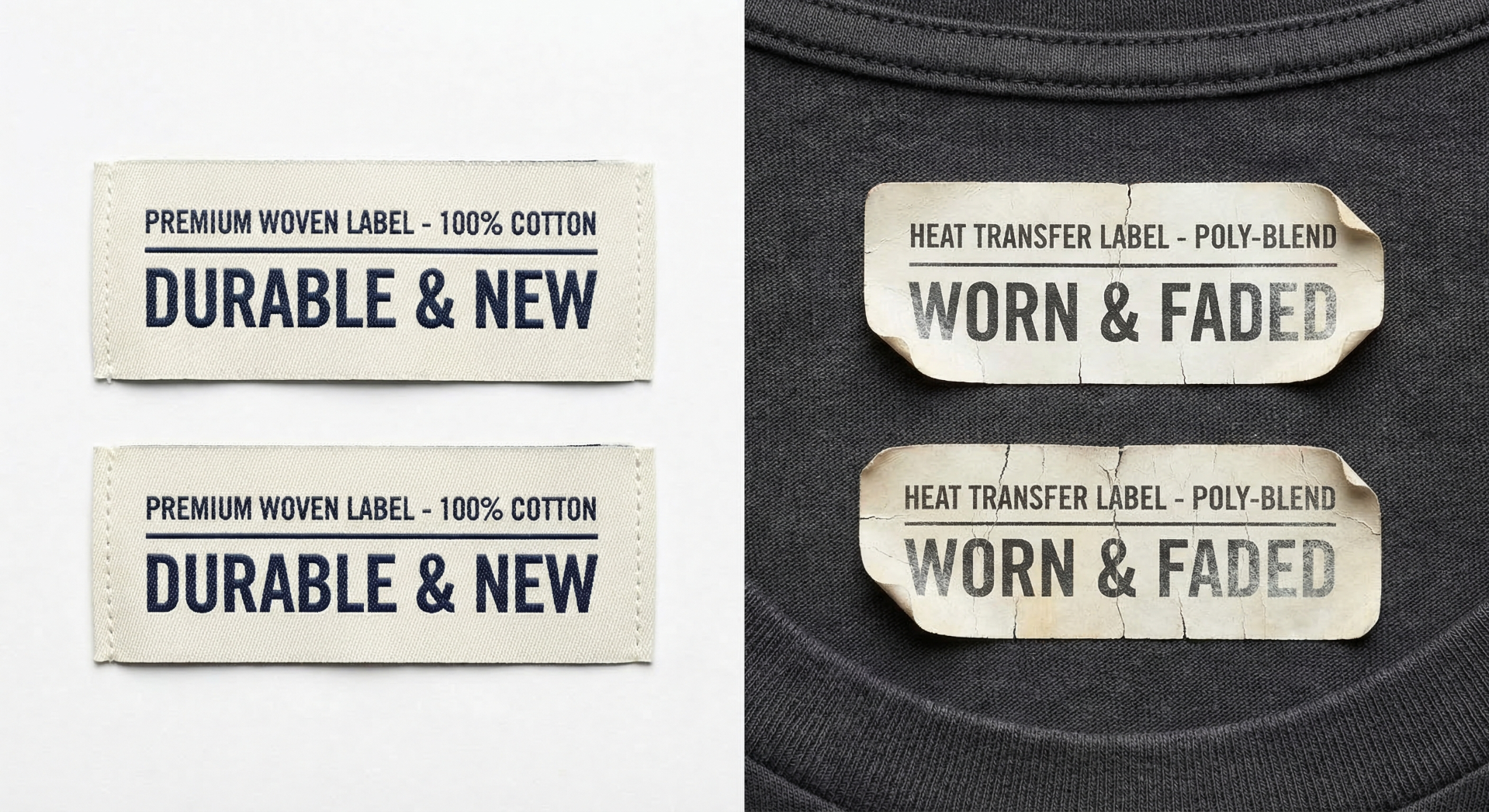
Because woven labels are made from thread and constructed as a textile, they are built to last the full lifespan of a garment. The design cannot peel or crack because it is part of the fabric itself. Even after repeated wash cycles, woven labels maintain their structure, color, and overall appearance.
Heat transfer labels, while durable initially, tend to show wear over time. With repeated washing and drying, especially under higher heat, the printed layer can begin to fade, crack, or lift at the edges. This doesn’t happen immediately, but it becomes more noticeable as the garment ages.
For products that are expected to last years or go through heavy use, this difference becomes more important. For shorter lifecycle items, it may be less of a concern.
Comfort & Wearability: How the Label Feels
One of the biggest advantages of heat transfer labels is comfort.
Because they are applied directly to the fabric with no added thickness, they create a completely smooth, tagless experience. There are no edges, folds, or stitching, which makes them especially popular for t-shirts, activewear, and garments worn directly against the skin.
Woven labels, on the other hand, have a physical presence. Depending on how they are sewn and where they are placed, they can sometimes be felt by the wearer. That said, many brands prefer this because it gives a more substantial, premium feel that customers often associate with higher-quality garments.
Visual Appearance: Branding & Design Capabilities
Both label types offer strong visual appeal, but in different ways.
Woven labels have a textured, dimensional look that feels elevated and classic. The thread-based construction gives them a premium aesthetic that works especially well for brand logos and signature labels. However, there are limitations when it comes to very fine detail, gradients, or highly complex artwork.
Heat transfer labels excel in detail. Because they are printed, they can reproduce intricate designs, small text, gradients, and even photographic elements with precision. This makes them a great option for care labels, sizing information, or designs that would be difficult to achieve with thread.
Pricing & Production: Upfront Cost vs. Efficiency
Cost is another key consideration, and this is where the two options often diverge.
Woven labels typically have a higher upfront cost, especially at lower quantities. The weaving process is more involved, and the labels require sewing during production, which adds an extra step. However, as quantities increase, the cost becomes more efficient.
Heat transfer labels are generally more cost-effective, particularly for smaller runs. They are quicker to produce and easier to apply, since they don’t require sewing. This makes them a strong option for startups, test runs, or products with tighter margins.
Use Cases: Where Each Option Works Best
The choice between woven and heat transfer labels often comes down to how the garment will be used.
Woven labels are commonly used in premium apparel, denim, outerwear, and products where branding is a focal point. They are ideal for garments designed to last and for brands that want to emphasize quality and craftsmanship.
Heat transfer labels are widely used in t-shirts, activewear, and lightweight garments where comfort is a priority. They are also a popular choice for care labels, size tags, and applications where a clean, tagless finish is preferred.
Many brands use a combination of both—woven labels for brand identity and heat transfers for functional information.
Pros & Cons: A Quick Comparison
Woven labels offer long-term durability, a premium look and feel, and strong brand presence, but they come with a higher upfront cost and typically require sewing. Heat transfer labels provide a soft, tagless finish, lower cost for small runs, and excellent detail, but they may show wear over time and are more sensitive to heat and repeated washing.
Making the Right Choice for Your Brand
The decision ultimately comes down to your product, your customer, and your priorities.
If you’re building a brand centered around longevity, quality, and a premium feel, woven labels are a strong choice. If your focus is comfort, efficiency, and flexibility—especially for lightweight garments or shorter production runs—heat transfer labels may be the better fit.
At Quality Woven Labels, we manufacture both because we know there’s no single solution that works for every product. The best choice is the one that supports your brand and performs the way your customers expect.
The information below is required for social login
Sign In
Create New Account